
How a protein that moves fats inside cells helps the eye respond to light.
- 5 October 2026
- 2 min read
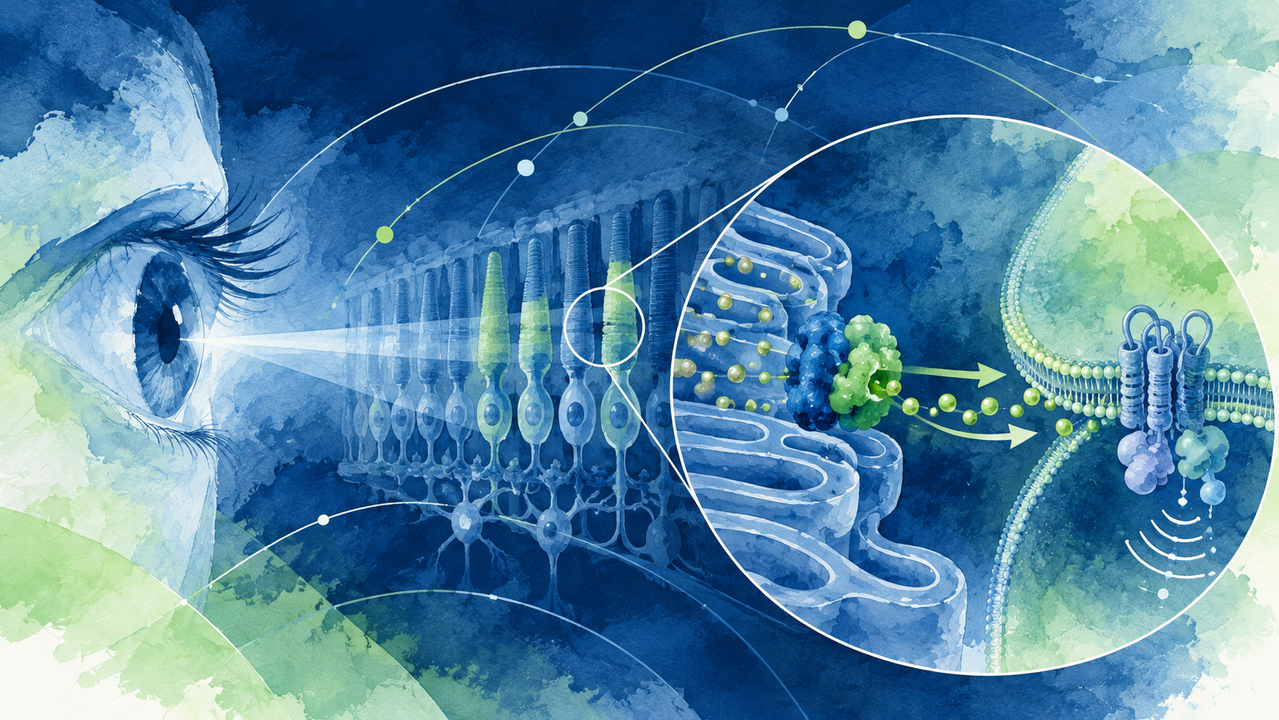
Researchers at Bengaluru’s National Centre for Biological Sciences (NCBS) have found that CERT, a protein that transfers lipids between cell membranes, helps maintain the cellular processes photoreceptors need to respond to light. In fruit flies, disrupting this protein weakened the electrical response to light.
Our ability to see begins when specialised cells called photoreceptors detect light and convert it into electrical signals. This process depends on carefully coordinated activity inside the cell, including the movement of lipid molecules that help organise cell membranes and support signalling. Researchers led by Prof. Raghu Padinjat at the National Centre for Biological Sciences (NCBS), Bengaluru, investigated the role of a protein called CERT, which transfers a type of lipid known as ceramide between cellular membranes. Using fruit flies (Drosophila) as a model, they found that disrupting CERT altered lipid levels in photoreceptor cells and reduced the density of contact sites between two internal cell membranes. The disrupted cells also replenished a key molecule involved in light-triggered signalling more slowly and showed a weaker electrical response to light. The findings show that CERT does more than transfer lipids: it also helps maintain the membrane organisation needed for efficient signalling in living cells. This improves our understanding of the fundamental biology behind how photoreceptors respond to light. The study is basic biological research in fruit flies; it does not demonstrate a treatment for human vision disorders.
More Stories

A Small Mirror with a Big Role in Satellite Communication

IISc and Samsung Join Hands to Advance Quantum Technology in India