
IISc Develops Membranes That Can Selectively Extract Uranium from Seawater
- 4 September 2026
- 2 min read
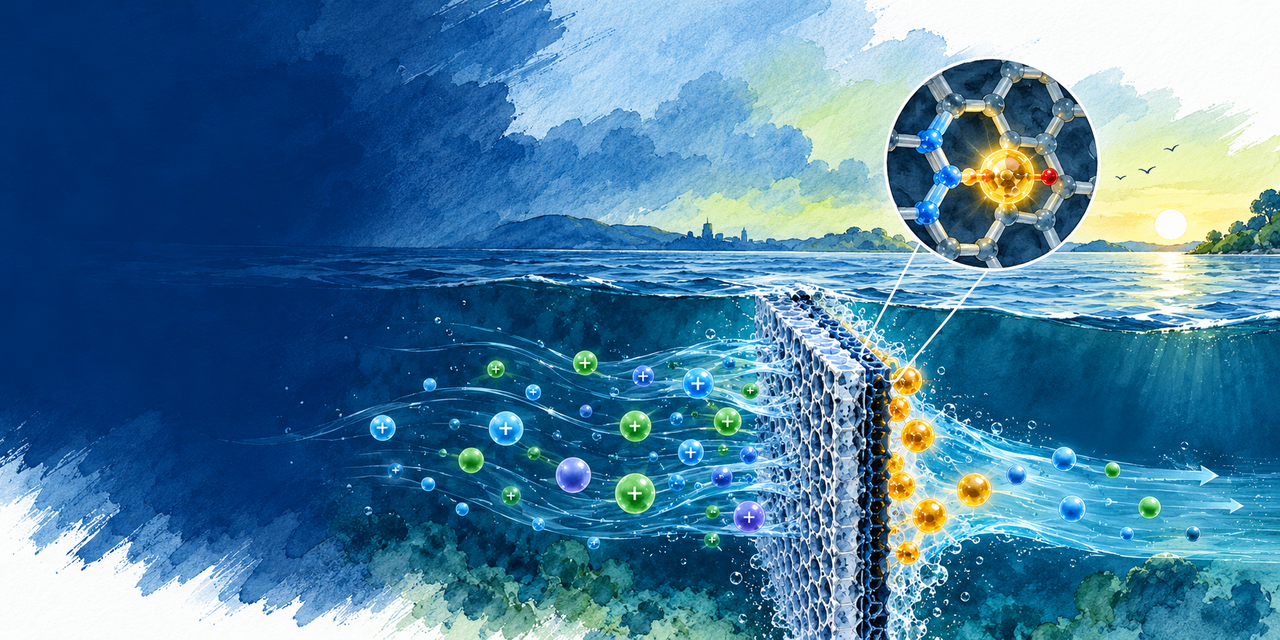
Researchers at IISc Bengaluru have designed special membranes that can separate uranium-containing ions from seawater while allowing common salts and other ions to pass through. This research could contribute to future technologies for recovering uranium, a potential fuel for nuclear energy, from the oceans.
Uranium is an important material for nuclear energy, and seawater contains uranium in very small concentrations. Recovering it is challenging because seawater contains many other dissolved ions that compete with uranium during separation. Researchers from the Department of Physics at IISc Bengaluru have investigated a new approach using covalent organic framework (COF) membranes. Their study shows that specially arranged, layered COF membranes can completely reject uranyl ions while allowing common seawater ions to pass through. The team examined how the arrangement of the membrane layers influences the movement of different ions. In simple terms, imagine a very fine sieve that separates one specific substance from a mixture without stopping everything else. The IISc researchers have designed a nanoscale membrane that can distinguish uranium-containing ions from the many other ions present in seawater. Instead of depending mainly on adding chemicals that attract uranium, the method uses the precise arrangement of the membrane’s layers to control which ions can pass through. This is a promising research direction, but it does not mean that a commercially viable, large-scale uranium extraction plant is already available.