How Temperature Changes Can Help Materials Lose Their “Memory”
- 2 September 2026
- 2 min read
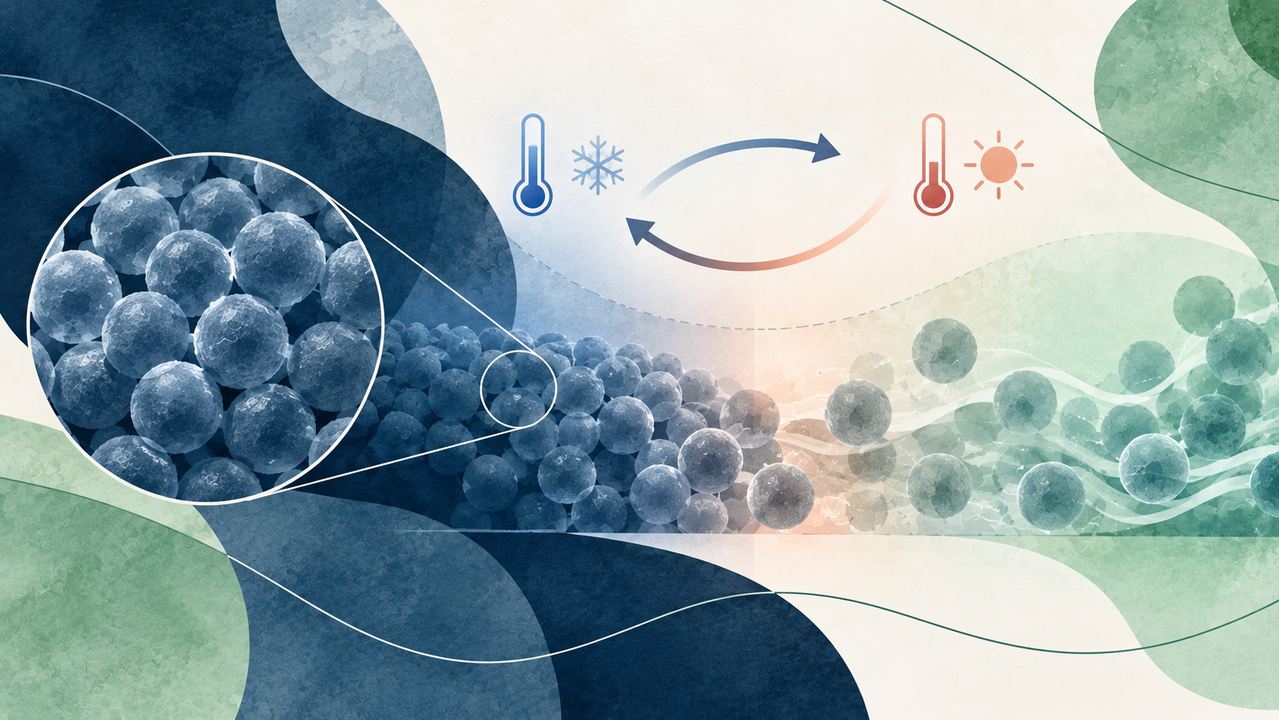
Researchers at RRI found that sudden temperature changes can help crowded particles rearrange, potentially improving how temperature-sensitive materials behave.
Researchers at RRI studied tiny, soft particles called microgels packed so tightly that they behave like a solid. They found that changing the temperature more rapidly can trigger rearrangements within the material, briefly allowing it to flow and reducing the influence of its previous heating and cooling history. This shows that how a material reaches a temperature can matter just as much as the final temperature itself.
This finding could help researchers better control materials used in drug delivery, where temperature-sensitive microgels can swell, shrink and release medicines. Understanding how these materials respond to temperature changes may support the design of more controlled drug-release systems and other smart materials. Further research could investigate how mechanical shocks affect these materials and whether similar control principles apply to other jammed systems.